VelvetYield
Enzyme support for puree lines that need to run smooth, clean, and repeatable
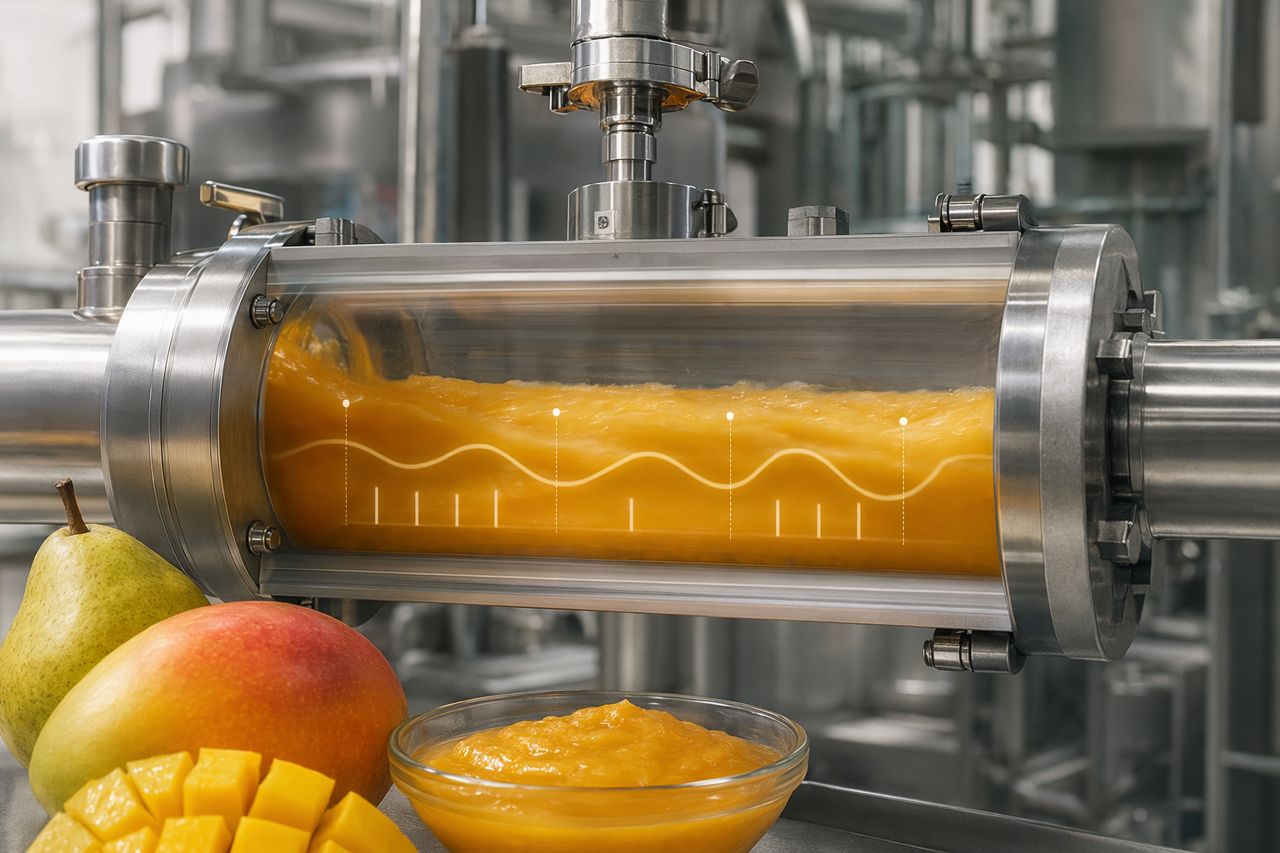
Thick apple, pear, apricot, mango, carrot, and mixed-fruit purees can be difficult to pump, screen, concentrate, and fill consistently. A small shift in raw fruit maturity or mash structure can show up as higher backpressure, slower filtration, unstable texture, or a batch that takes too long to finish.
VelvetYield is an enzyme supplier for fruit puree processing built for fruit puree and baby food plants that need practical process gains without turning production into an enzyme chemistry project.
We help process managers apply targeted enzyme systems to improve puree flow, release more usable solids, reduce screening load, and protect a consistent spoonable texture from batch to batch.
Request a quote from VelvetYield
Where VelvetYield fits in your plant
VelvetYield enzymes are selected for real puree operations: fruit receiving, crushing, mash conditioning, hot or warm holding, pressing, screening, finishing, concentration, and filling.
Common line challenges we help address
- Thick mash that overloads pumps or slows transfer
- Variable puree viscosity between fruit lots
- Low pressing yield from high-pectin fruit tissue
- Poor screen throughput and frequent blinding
- Cloudy or unstable juice fractions before concentration
- Texture drift after thermal treatment or blending
- Long batch hold times caused by slow separation behavior
- Rework risk when puree does not meet target consistency
Our role is to help you choose the right enzyme approach, starting conditions, contact time, and in-process checks for your equipment and finished product target.
Built for baby food and puree process control
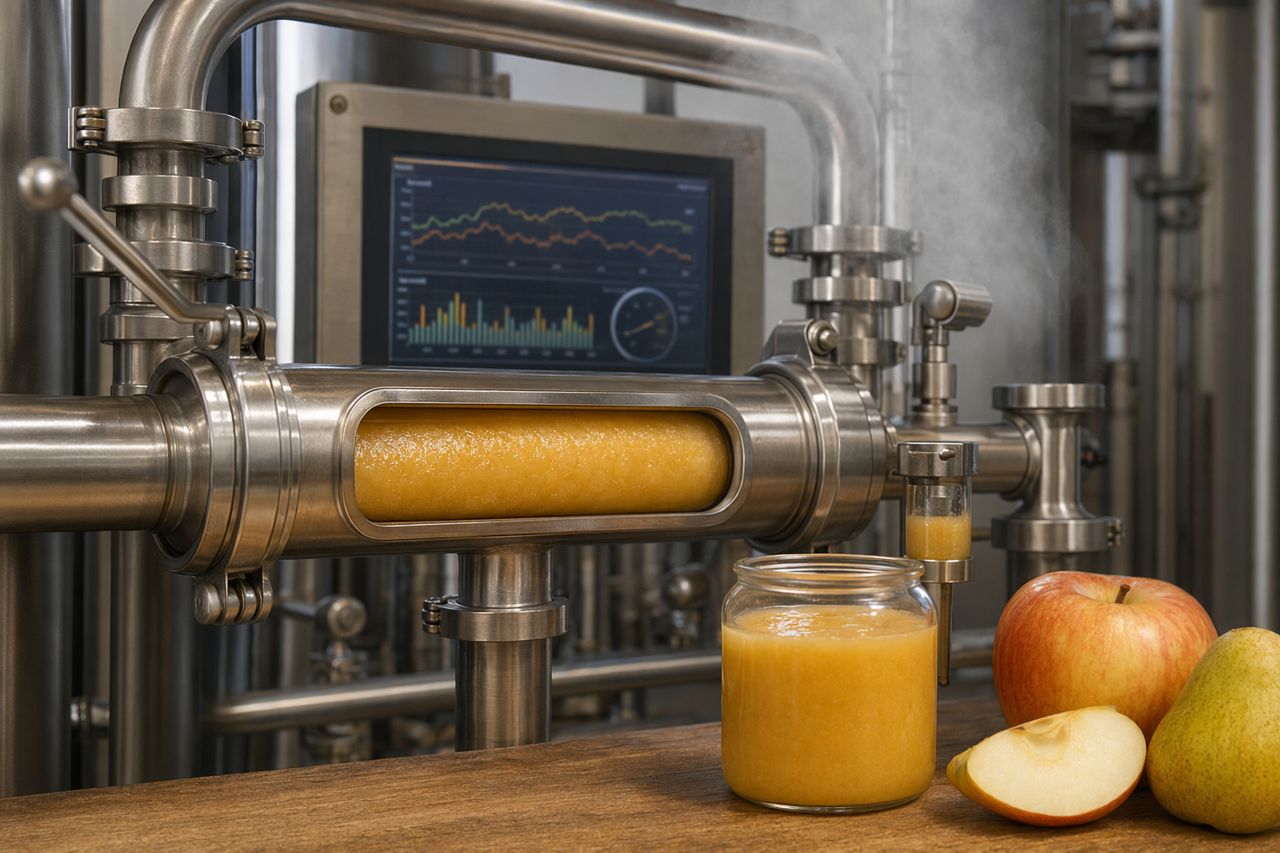
Baby food plants need more than yield. They need gentle handling, clean labeling decisions, controlled texture, validated heat steps, and predictable batching. VelvetYield supports these requirements with enzyme solutions that are practical to dose, easy to trial, and aligned with plant-floor decision making.
What you can expect from a VelvetYield program
- Lower apparent viscosity for easier pumping and transfer
- Improved pressing and decanting behavior in fruit mash
- More consistent puree texture across seasonal raw material variation
- Better screenability with reduced solids build-up
- Faster clarification or separation where clear fruit fractions are required
- Reduced batch variability before concentration or filling
- Technical guidance for trial design and scale-up
We focus on measurable plant outcomes: flow, yield, hold time, pressure, screen loading, texture, and finished-batch acceptance.
Enzyme systems matched to fruit structure
Different fruits behave differently. Apple and pear often require pectin-focused control. Mango and apricot bring dense pulp, fiber, and texture sensitivity. Vegetable-fruit blends may need support for cell-wall breakdown while preserving body.
VelvetYield application areas
Mash viscosity reduction
For fruit mashes that become too thick to move efficiently, VelvetYield helps reduce resistance during transfer and thermal processing while maintaining the texture target for puree or baby food.
Pressing and yield improvement
For plants pressing fruit mash before puree, juice, or concentrate production, enzyme conditioning can help release bound liquid, reduce wet pomace, and improve usable yield.
Screening and finishing support
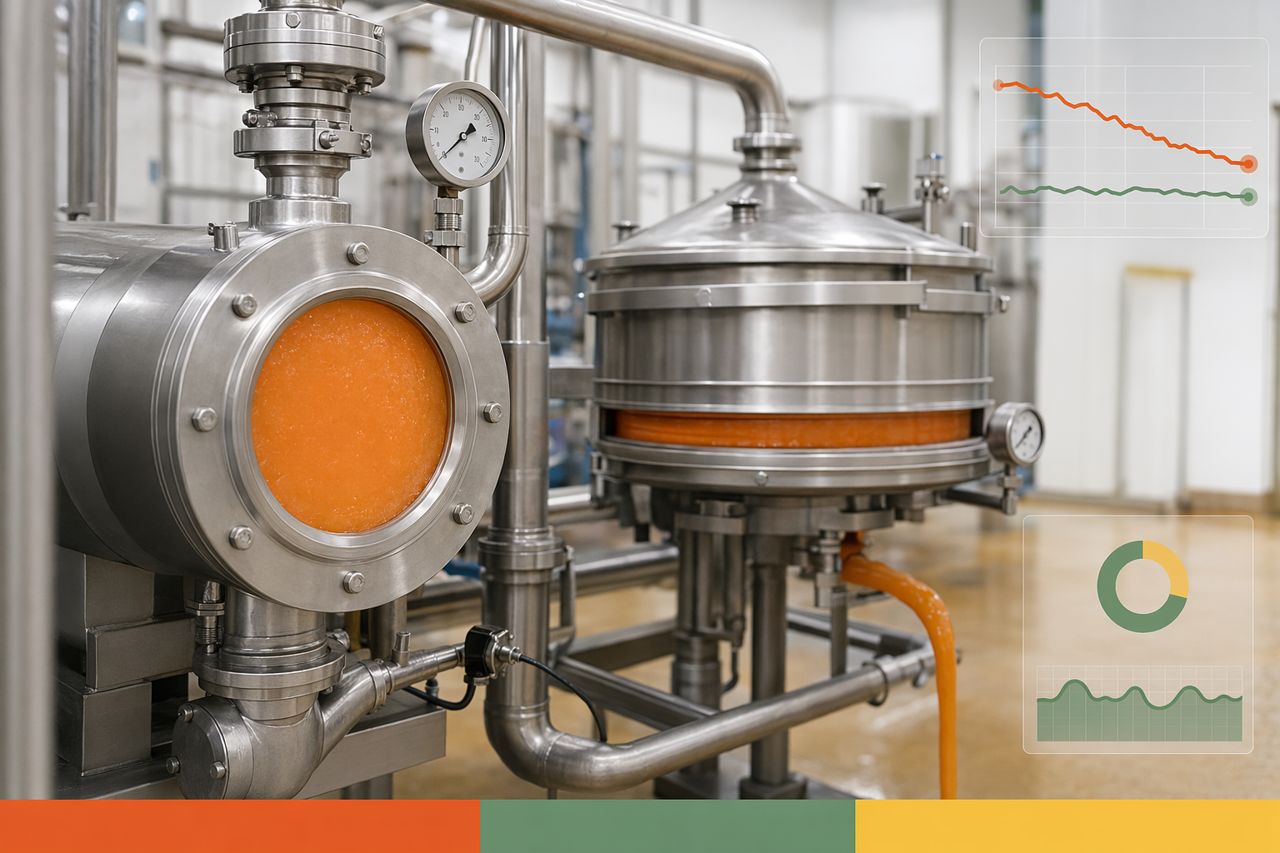
When puree backs up at finishers, strainers, or screens, a controlled enzyme step can reduce blinding, improve throughput, and support a more uniform particle profile.
Concentration and evaporation behavior
Lower viscosity before concentration can improve heat transfer, reduce process stress, and support smoother evaporation and filling behavior.
Texture consistency in finished puree
VelvetYield helps plants tune enzyme selection so the process improves flow without stripping away the body and spoonable mouthfeel required in finished baby food puree.
A simple technical path from trial to production
You do not need a complicated enzyme program to see whether VelvetYield fits your line. We keep the evaluation structured and plant-friendly.
1. Define the operating problem
Tell us the fruit base, process step, temperature window, hold time, pH range, equipment constraints, and the metric you want to improve.
2. Select the enzyme approach
We recommend a targeted enzyme system for the substrate and outcome: viscosity reduction, yield release, screening improvement, clarification support, or texture control.
3. Run a controlled plant or pilot trial
Use your normal raw material and compare against your current process. Track practical indicators such as pump load, transfer time, press yield, screen pressure, puree viscosity, and finished texture.
4. Scale with clear handling guidance
Once the result is confirmed, VelvetYield supports dosing practice, addition point, mixing requirements, hold conditions, and batch records for repeatable production.
Why process managers choose VelvetYield
- Technical recommendations based on puree line realities, not generic enzyme theory
- Support for fruit variability across harvest, maturity, and supplier changes
- Enzyme options for both smooth puree and pressed fruit fractions
- Clear guidance for addition point, mixing, contact time, and heat inactivation planning
- Practical proof points tied to line performance and batch reliability
- Calm, responsive support during trials, scale-up, and routine production
VelvetYield is built for plants that want controlled improvement: easier flow, cleaner separation, steadier texture, and fewer surprises at the filler.
Ready to improve puree handling without disrupting the line?
If your plant is fighting high viscosity, slow screens, low pressing yield, or inconsistent texture, VelvetYield can help you evaluate the right enzyme system for your fruit base and process target.
Request a quote using the on-site form
Share your fruit type, batch size, process step, target improvement, and current constraint. We will respond with a practical recommendation for your puree operation.