Enzyme Supplier for Fruit Puree Processing
VelvetYield supplies enzyme processing aids for fruit puree and baby food plants that need calmer flow, stronger yield, cleaner separation, and more repeatable texture from batch to batch.
For process managers working with apple, pear, apricot, peach, mango, berry, and mixed fruit bases, the issue is rarely one variable. Ripeness changes. Pectin load shifts. Starch behavior varies. Fibrous fruit creates drag in pumps, screens, finishers, and filters. VelvetYield helps match enzyme selection to the real plant condition: puree viscosity, pressing yield, pulp breakdown, clarification target, heat profile, residence time, and final texture specification.
VelvetYield is an enzyme supplier for fruit puree processing focused on practical plant outcomes — not overcomplicated lab language.
Processing Enzymes for Puree Yield, Texture, and Flow
Fruit puree production needs a controlled balance. Too little breakdown can leave trapped juice, heavy pulp, unstable viscosity, and slow filtration. Too much breakdown can create thin texture, over-soft mouthfeel, or inconsistent specification. VelvetYield supports plants with enzyme options designed for targeted processing improvement.
Pectinase for viscosity reduction and juice release
Pectin-rich fruits can hold water inside the pulp structure, increasing mash thickness and limiting pressing performance. Pectinase helps reduce pectin-driven viscosity so puree and mash can move more easily through heating, holding, finishing, and separation steps.
Typical plant goals include:
- Lower puree or mash viscosity before pressing or finishing
- Improved juice and puree recovery from fruit solids
- More predictable pump load and transfer behavior
- Better screen, decanter, or filtration performance
- Reduced hold-ups caused by gel-like pulp structure
Cellulase for fiber modification and pulp handling
Cell wall material can make puree feel heavy, fibrous, or inconsistent between fruit lots. Cellulase can support controlled softening of plant fiber, helping improve extraction and reduce mechanical resistance during processing.
Typical plant goals include:
- Better breakdown of fibrous fruit tissue
- Improved yield from peels, pulp, and soft solids
- Smoother puree transfer through process equipment
- More consistent texture across seasonal fruit variation
- Lower risk of overloaded finishing screens
Amylase for starch-related viscosity control
Some fruit materials and blends can bring starch-related thickening, especially in certain maturity stages or formulations. Amylase helps manage starch-driven viscosity so heating, mixing, and filling behavior remains more predictable.
Typical plant goals include:
- Reduced unexpected thickening during thermal steps
- More stable flow in fruit bases and blended purees
- Improved mixing behavior before deaeration or filling
- Better batch-to-batch consistency in texture targets
- Easier management of starch-sensitive fruit inputs
When a Fruit Puree Plant Should Consider Enzyme Support
VelvetYield is commonly contacted when a plant sees one or more recurring production symptoms:
- Pressing yield is below target despite acceptable fruit quality
- Puree viscosity changes sharply between fruit lots
- Finishers, screens, or filters blind faster than expected
- Pulp texture is too coarse, too heavy, or inconsistent
- Pumps run harder during certain batches
- Heat transfer is less efficient because mash is too thick
- Decanter or separation behavior varies by season
- The same recipe produces different filling behavior
- Rework increases because texture drifts outside specification
In baby food and puree operations, these issues are not just efficiency problems. They can affect schedule stability, tank utilization, thermal process consistency, and finished product uniformity.
Built for Aseptic and High-Reliability Puree Operations
Fruit puree and baby food plants operate under tight hygiene, traceability, and process control expectations. VelvetYield supports enzyme procurement with documentation and batch consistency in mind.
Depending on project requirements, supply discussions can include:
- Product selection by fruit type and process objective
- Compatibility with mash treatment, puree treatment, or clarification steps
- Recommended process window guidance without unnecessary complexity
- Allergen, origin, and regulatory documentation where applicable
- Lot traceability and certificate support
- Bulk packaging options for plant-scale use
- Supply planning for seasonal fruit campaigns
Application Points in a Puree Line
The best enzyme addition point depends on the fruit, equipment layout, and desired result. VelvetYield helps plants evaluate where enzyme treatment can create the most value without disturbing product quality.
Common addition points
- After crushing or milling: Supports early pulp breakdown before heating or holding.
- During mash holding: Gives the enzyme controlled contact time before pressing or finishing.
- Before pressing: Helps release bound liquid and improve yield from the mash.
- Before finishing or screening: Can reduce pulp drag and improve pass-through behavior.
- Before clarification or filtration: Supports cleaner separation where a clearer fruit base is required.
- In blended fruit bases: Helps manage viscosity changes created by mixed raw materials.
Practical Selection Factors
VelvetYield does not recommend enzymes from a generic list. The right choice depends on plant conditions.
Key selection factors include:
- Fruit type and maturity range
- Pectin, fiber, or starch contribution
- Target puree texture and mouthfeel
- Whether the goal is cloudy puree, smooth puree, clarified base, or yield improvement
- Mash temperature and residence time
- Press, finisher, decanter, screen, or filter design
- Thermal process sequence
- Batch size and dosing control method
- Clean-label and processing aid expectations in the destination market
What Better Enzyme Control Can Improve
A well-matched enzyme program can support measurable operational improvements across the puree line.
Yield and recovery
Enzymes can help release more usable fruit material from the same incoming raw fruit, reducing loss in pomace, pulp waste, or retained solids.
Viscosity and pumpability
Controlled pectin, fiber, or starch modification can reduce heavy flow behavior, helping puree move more evenly through tanks, heat exchangers, and transfer lines.
Texture consistency
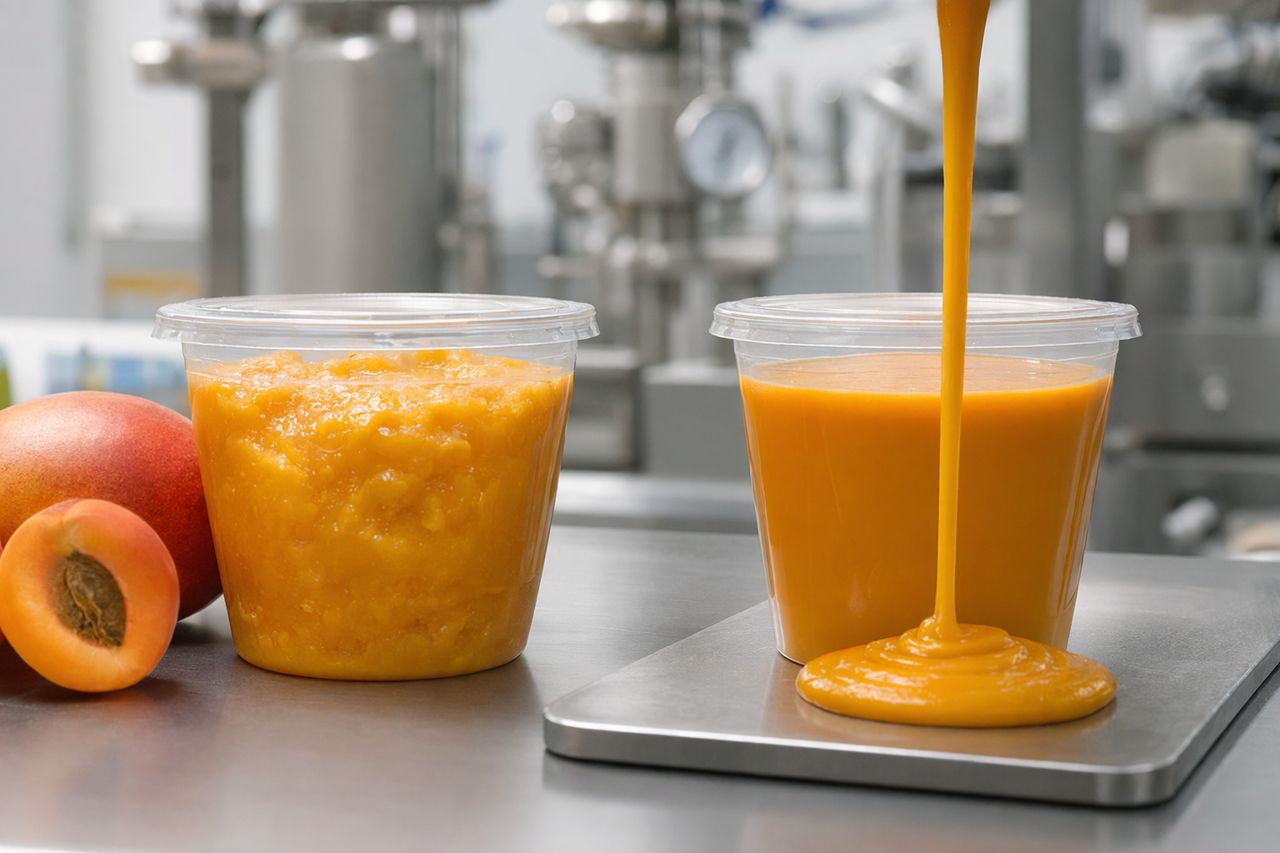
Fruit lots vary. Enzyme treatment can help narrow batch variation so the finished puree remains closer to the intended texture profile.
Filtration and separation behavior
For clarified fruit bases or low-pulp streams, enzyme treatment can improve filterability and reduce solids-related slowdowns.
Batch reliability
More predictable mash behavior can help stabilize processing time, reduce operator adjustments, and improve schedule confidence during seasonal campaigns.
Why VelvetYield
VelvetYield works as a calm, technical supply partner for puree and baby food processors. The focus is simple: match the enzyme to the plant problem, support scale-up, and keep supply dependable.
Plants choose VelvetYield for:
- Focused enzyme options for fruit puree processing
- Clear guidance for pectinase, cellulase, and amylase selection
- Bulk supply suitable for production environments
- Process-aware support for viscosity, yield, texture, and filtration goals
- Documentation support for food manufacturing quality systems
- Quote-based procurement aligned with plant volume and campaign timing
Request a Quote for Fruit Puree Enzymes
Tell VelvetYield what fruit you process, your target outcome, and where the bottleneck appears in the line. We can help identify a suitable pectinase, cellulase, amylase, or blended enzyme approach for your puree operation.
Use the on-site request form and include:
- Fruit type or blend
- Current process step where enzyme treatment is planned
- Main goal: yield, viscosity, filtration, texture, or batch consistency
- Batch size or expected monthly usage
- Packaging preference
- Required documentation