Baby Food Pouch Filling and the Viscosity Window Operators Actually Feel
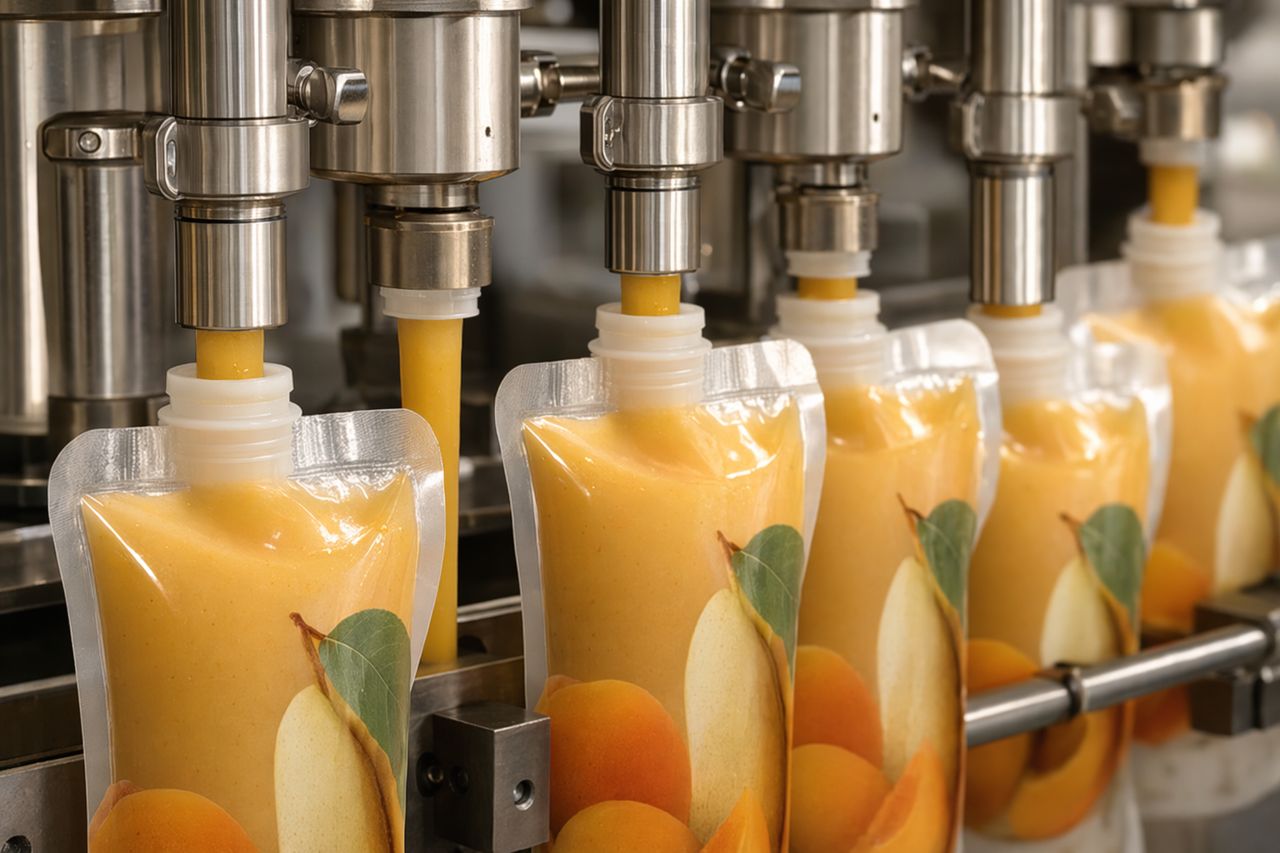
In a baby food plant, viscosity is not just a lab number. Operators feel it at the filler: in the way puree cuts off at the nozzle, in the number of weight corrections made during a run, in seal area cleanliness, and in whether a line sounds calm or constantly reactive.
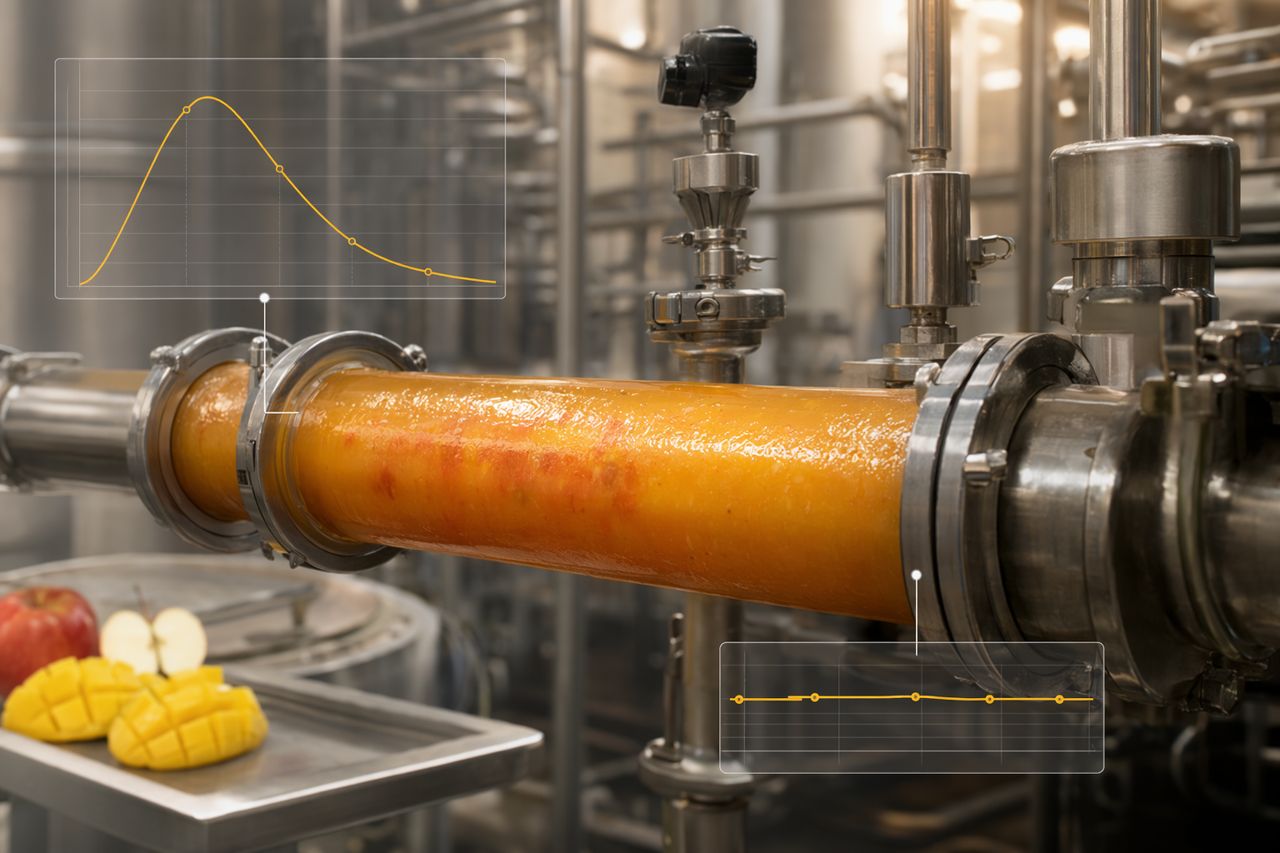
Fruit puree is naturally variable. Apple, pear, mango, apricot, peach, and mixed-fruit bases can arrive with different pectin structures, pulp loads, soluble solids, and heat histories. Even when the recipe is correct, the pouch filler may see a product that is too elastic, too stringy, or too loose for a stable filling window.
VelvetYield works as an enzyme supplier for fruit puree processing to help plants bring that window under better control before the product reaches the filler.
What operators mean by a good viscosity window
A practical pouch-filling viscosity window is the range where puree flows consistently through transfer lines, dosing valves, and filling nozzles without forcing constant intervention.
In plant-floor terms, the right window means:
- The product moves without pressure spikes or pump hunting.
- Nozzles cut cleanly instead of tailing, roping, or splashing.
- Fill weights hold closer to target with fewer manual corrections.
- Seal areas stay cleaner because product behavior is predictable.
- Product texture remains smooth, full, and suitable for the intended eating experience.
- Downstream checks feel routine rather than corrective.
The goal is not simply thinner puree. The goal is controlled flow with texture integrity.
Why baby food puree drifts out of range
Puree viscosity can change for several reasons before pouch filling:
Fruit structure changes by variety and season
Two apple lots can behave differently after milling and heat treatment. Mango and apricot can add body and slipperiness in different ways. Pear can soften the texture profile but still contribute fine suspended solids. Mixed-fruit recipes multiply the variables.
Pectin can hold water and create elastic flow
Native pectin networks can trap water and create a puree that looks acceptable in a tank but resists clean filling at high speed. The filler may respond with inconsistent cutoff, nozzle stringing, or pressure variation.
Heat history affects both body and breakdown
Preheating, holding time, and hot transfer all influence puree behavior. A process that works well for one raw material may create an overly tight or overly relaxed texture in another.
Finisher and screen behavior can mask the real issue
When puree does not pass cleanly through finishing or filtration steps, teams may change screens, adjust pump speed, or dilute. Those actions may help the moment but can move the final pouch texture away from target.
Where enzyme treatment helps
Targeted enzyme processing can modify fruit cell-wall and pectin behavior so puree flows more predictably without relying only on mechanical force or dilution.
For pouch applications, the benefit is usually seen in several connected places:
- Pressing and extraction: more recoverable puree from prepared fruit or mash.
- Finishing: less screen loading and smoother transfer through strainers or finishers.
- Viscosity control: reduced batch-to-batch drift in pumpable texture.
- Filling stability: cleaner cutoff, steadier fill weights, and fewer operator adjustments.
- Texture consistency: a smoother eating profile without making the product feel watery.
The exact enzyme approach depends on the fruit base, target texture, heating sequence, and hold time available in the plant.
The filling line symptoms that point upstream
When pouch filling becomes unstable, the filler is often blamed first. But many symptoms start earlier in puree preparation.
Common signals include:
- Operators increasing or decreasing fill settings repeatedly through the same batch.
- Product tails hanging from the nozzle between cycles.
- Occasional splashes near the spout or seal area.
- Inconsistent pouch weights even when mechanical settings are unchanged.
- Higher reject checks for seal contamination.
- Extra flushing or cleanup because puree does not break cleanly.
- Pressure alarms or unstable flow from the feed system.
If the same filler performs well with one fruit base and poorly with another, the viscosity window is likely part of the problem.
Do not confuse thinness with control
A common mistake is treating viscosity reduction as the only target. In baby food, that can create new issues: weak mouthfeel, phase separation risk, dull texture, or a product that no longer matches the brand standard.
A better process question is: What flow behavior does the pouch filler need, and what texture does the finished product need to keep?
VelvetYield helps plants tune enzyme selection and process placement around both sides of that question.
Practical control points for a better pouch run
1. Define the acceptable filling behavior
Before changing the enzyme program, define what success looks like at the filler. Useful observations include nozzle cutoff, fill weight drift, feed pressure stability, seal-area cleanliness, and operator adjustment frequency.
2. Track puree behavior before and after heat treatment
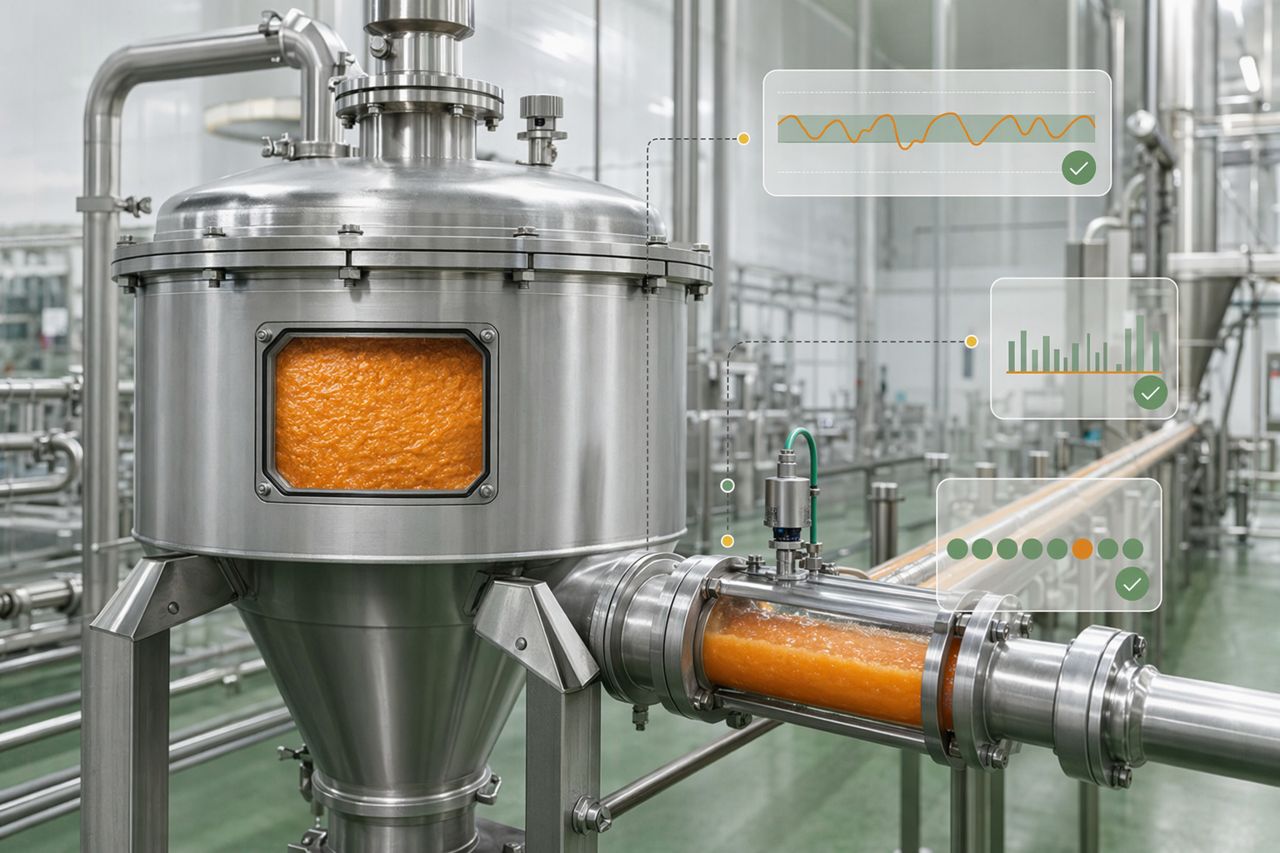
Fruit puree can behave differently after heating, holding, deaeration, and final pasteurization. Sampling only one point may miss the shift that matters most to filling.
3. Match treatment to fruit blend, not just fruit name
An apple-based blend with mango behaves differently from apple-pear or apricot-banana. Solids level, particle size, pectin type, and pulp load all affect enzyme response.
4. Protect the final texture target
For baby food pouches, the finished product must remain smooth, stable, and spoonable or squeezable as intended. Enzyme processing should support that target, not flatten it.
5. Give operators a repeatable window
The best enzyme program is one the production team can run with confidence: clear dosing point, practical contact time, compatible temperature window, and visible effect on line behavior.
How VelvetYield supports puree and baby food plants
VelvetYield supplies enzyme solutions for fruit puree processing with a focus on practical plant outcomes. For baby food pouch lines, we typically start with the process map rather than a generic recommendation.
We look at:
- Fruit types and seasonal variability.
- Mash or puree preparation method.
- Heating and holding sequence.
- Finisher, screen, or filtration constraints.
- Filler type and fill behavior.
- Desired finished texture and label requirements.
- Where the plant has enough residence time for controlled treatment.
From there, VelvetYield can recommend a suitable enzyme direction and support trial planning so your team can compare batches with clear operating observations.
What a successful trial should show
A useful trial does not need to be complicated. It should connect upstream enzyme treatment to downstream filling performance.
Look for:
- More stable transfer pressure.
- Reduced screen loading or easier finishing.
- More consistent puree body before filling.
- Cleaner nozzle cutoff.
- Fewer fill-weight corrections.
- Reduced seal-area contamination checks.
- Finished texture that remains aligned with the product specification.
These are the kinds of results process managers can discuss with operators, quality teams, and production planners in the same language.
The calm line is usually the controlled line
When puree viscosity is inside the right window, the filling room changes. Operators adjust less. The filler sounds more stable. Weight checks become less dramatic. Cleanup feels more predictable. Quality has fewer surprises to chase.
That calmness is not accidental. It starts with understanding how fruit structure, heat, finishing, and enzyme treatment interact before the pouch is filled.
VelvetYield helps fruit puree and baby food plants build that control into the process.
Request a quote
If your pouch line is dealing with viscosity drift, nozzle tailing, seal contamination, or inconsistent fill weights, VelvetYield can help you evaluate an enzyme approach for your puree process.
Use the on-site request a quote form and share your fruit base, process flow, target texture, and current filling challenge. We will respond with a practical recommendation for your plant trial.