CIP and Changeover Considerations for Enzyme-Treated Puree Lines
Enzymes can make puree production easier to control, but they also change how the line behaves between batches. When apple, pear, apricot, mango, or mixed-fruit puree is treated for viscosity reduction, pressing support, texture adjustment, or filtration readiness, the plant should look at clean-in-place and changeover as part of the process design — not as an afterthought.
For a process manager, the practical question is simple: can the line move from one fruit or specification to the next without long waiting time, unexpected residue, or inconsistent first-off quality?
VelvetYield supports plants as an enzyme supplier for fruit puree processing with a focus on controlled outcomes: predictable flow, stable texture targets, manageable solids behavior, and batch-to-batch repeatability.
Why enzyme-treated puree lines need a CIP lens
Enzyme treatment affects the physical behavior of puree. Pectin structure, suspended solids, serum release, and fiber dispersion can all influence how product moves through tanks, tubular heaters, holding sections, screens, decanters, filters, valves, and transfer pipework.
That means CIP and changeover planning should account for:
- Lower or changing viscosity during the treatment window
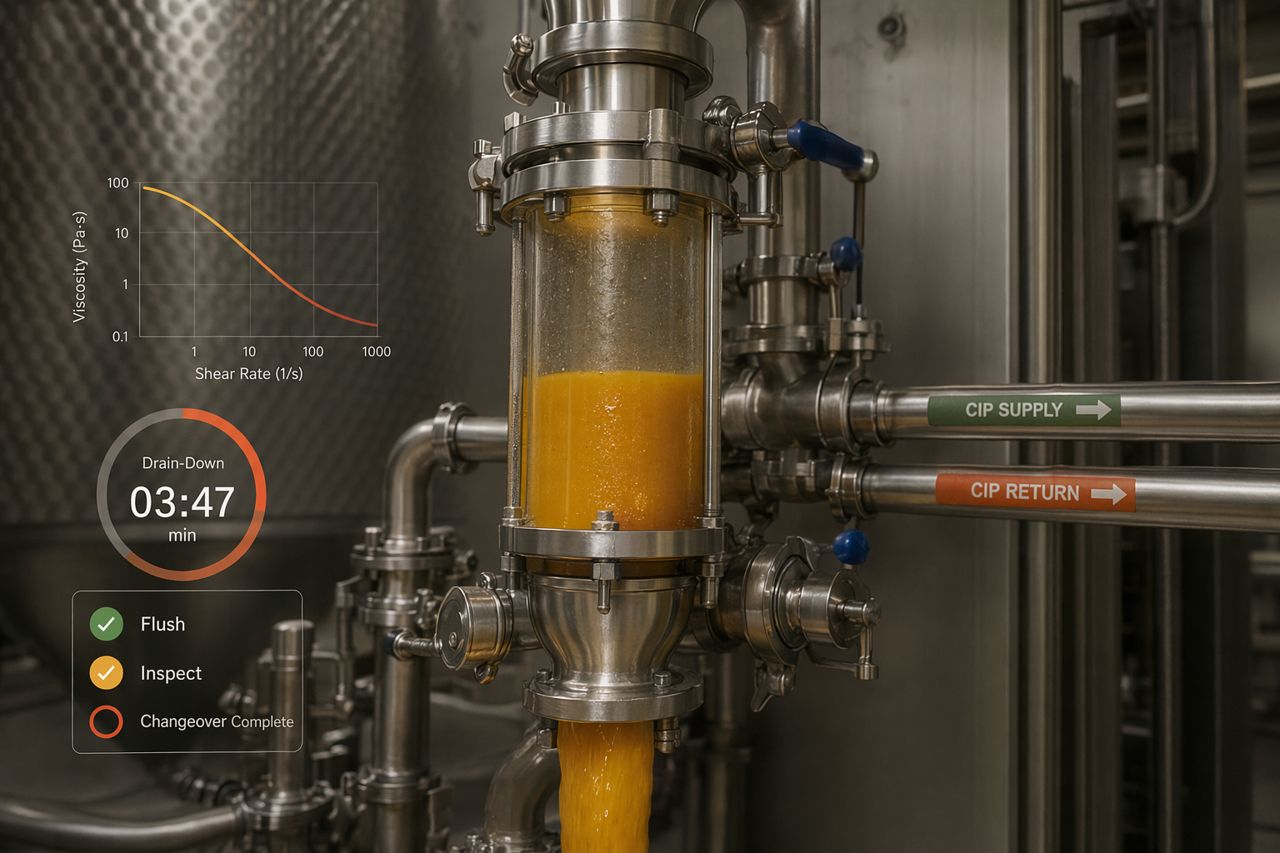
- Different drain-down behavior after holding or transfer
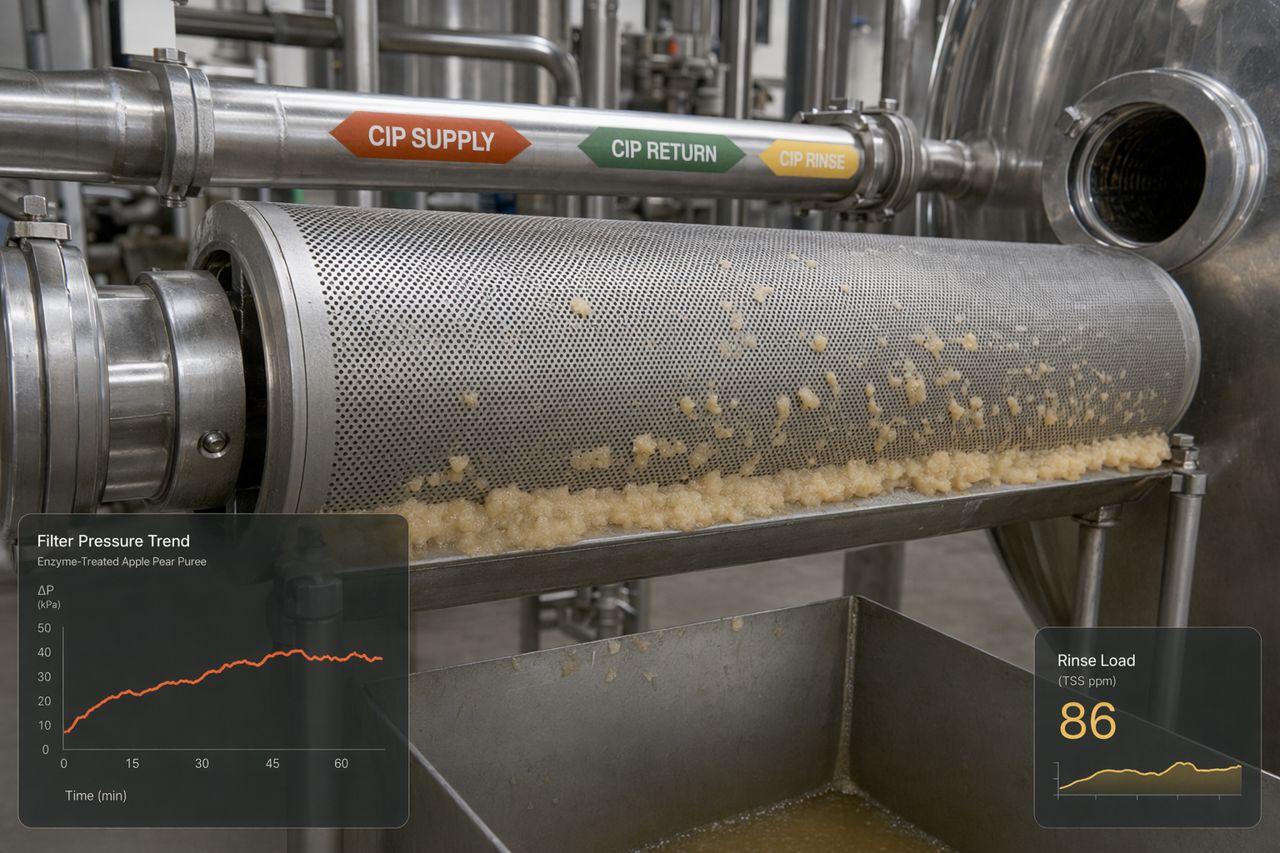
- Fine pulp movement through screens and filters
- Residue patterns in low-flow areas, valve seats, bends, and instrumentation ports
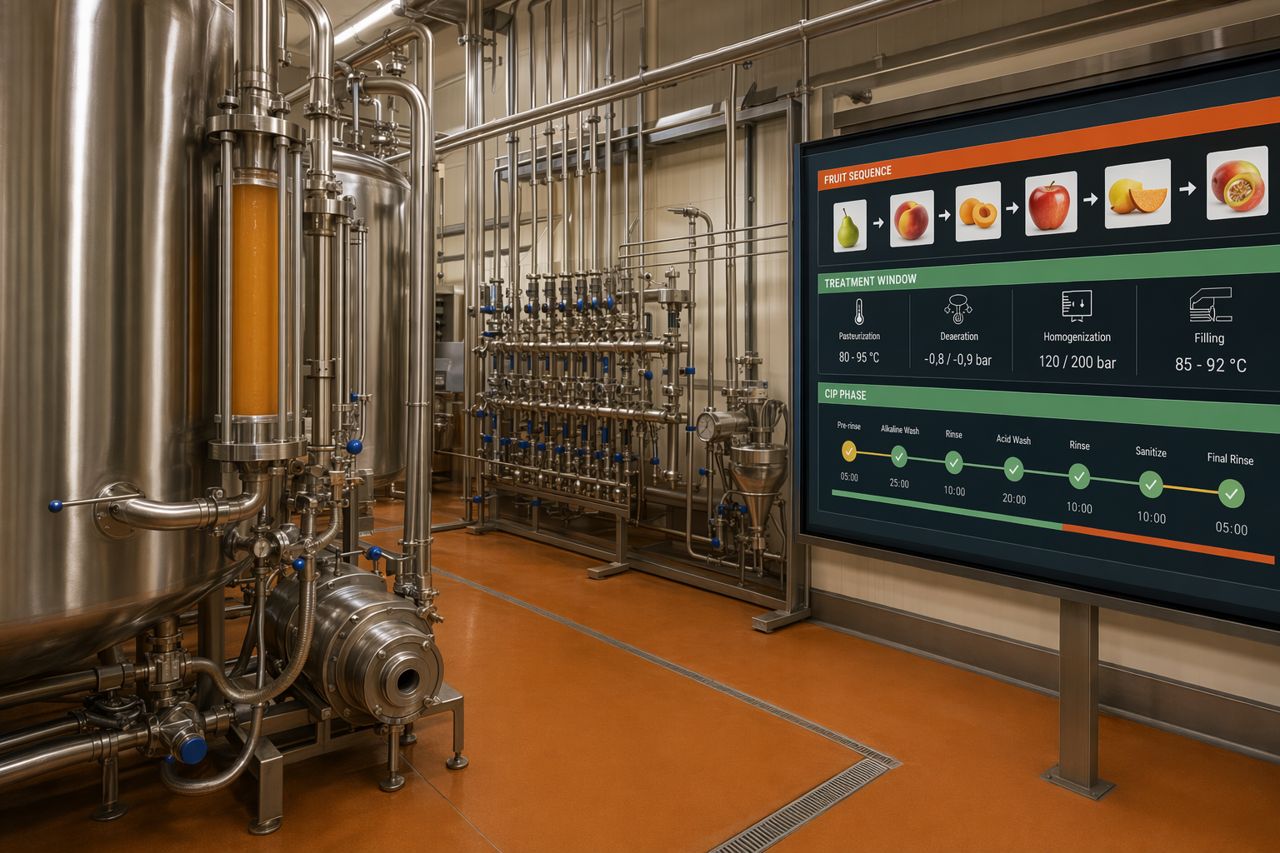
- Temperature transitions between enzymatic treatment and cleaning steps
- First-rinse load after high-pulp or high-pectin fruits
The goal is not to complicate the cleaning program. The goal is to make the production step predictable enough that cleaning can be scheduled confidently.
Start with the product map, not the enzyme drum
A useful changeover review begins with the puree path:
- Fruit receiving or prep
- Milling, pulping, or mash preparation
- Enzyme addition point
- Treatment tank or pipe hold
- Heating or enzyme stop step, where used by the site process
- Pressing, finishing, decanting, or filtration
- Balance tanks and filling feed
- CIP return and drain points
For each point, ask what the puree looks like before and after treatment. Is it thicker, more pumpable, more serum-rich, more fibrous, or more likely to carry fine particles? These observations help define where rinse timing, drain slope, screen inspection, and changeover sequencing matter most.
Changeover variables that affect batch reliability
1. Viscosity shift during processing
When enzymes reduce puree viscosity, the line may drain faster and leave less bulk product behind. That can help changeover, but it may also move fine solids deeper into equipment that previously held them upstream. Plants should observe where treated puree settles after pump stops, especially around tees, bypasses, sight glasses, and dead-leg-prone sections.
2. Pulp and fiber release
Some fruits release fine pulp differently after enzyme treatment. A puree that looks smoother in the tank may still carry solids that influence screens, strainers, or polishing filters. Screen condition before CIP, not only after CIP, should be part of the changeover routine.
3. Temperature window discipline
Enzyme performance depends on the plant’s selected temperature and residence time window. If a batch sits longer than planned before heating, transfer, or cleaning, texture and flow can drift from the expected profile. Good scheduling prevents production quality questions from becoming cleaning questions.
4. Holding tank geometry
Agitation, cone angle, outlet position, and recirculation pattern affect how treated puree leaves the vessel. A tank that drains well with untreated fruit may behave differently after viscosity drops. Changeover trials should document residual heel volume trends and visual residue location.
5. Mixed-fruit sequencing
Moving from a high-color or high-aroma fruit to a lighter profile can require tighter sequencing and sensory checks according to the plant’s own procedures. Enzyme-treated lines should be reviewed for both physical carryover and normal product identity controls, without assuming that lower viscosity automatically means easier changeover.
Practical CIP considerations for treated puree
Every plant has its own validated cleaning program and quality system. VelvetYield does not replace those internal procedures. Instead, our technical support helps process teams understand how enzyme-treated puree behaves so the existing hygiene program can be applied with fewer surprises.
Key considerations include:
- Pre-rinse timing: Start the first rinse before residues dry or thicken in exposed areas.
- Drain confirmation: Watch how treated puree clears from tanks, pipe runs, and equipment pockets.
- Screen handling: Inspect screens and strainers before cleaning so pulp loading is not hidden.
- Valve and seal attention: Confirm that low-motion areas are included in routine checks.
- Temperature transition: Avoid uncontrolled waiting between enzymatic treatment and downstream steps.
- Water load awareness: Track whether enzyme-treated batches reduce or increase first-rinse solids.
- Changeover documentation: Record fruit type, treatment window, observed viscosity, drain behavior, and any manual intervention.
Where enzyme selection influences cleanability
The same enzyme choice that supports pressing yield or viscosity control can also influence the character of the residue left in the line. For example, a treatment that produces a very fast viscosity drop may improve pumping but change how fines move into finishing equipment. A more controlled treatment profile may support steadier downstream behavior during long production runs.
For this reason, enzyme selection should be discussed alongside:
- Desired puree texture at transfer
- Press or finisher loading pattern
- Filtration pressure behavior
- Target batch length
- Planned product sequence
- CIP window and labor availability
- Sensitivity of the next product in the schedule
This is where an application-focused supplier can add value. VelvetYield helps plants evaluate enzyme programs in the context of the whole line, not just the reaction step.
A simple changeover observation checklist
Use plant-floor observations to make the next run more predictable:
Before enzyme addition
- Confirm fruit type, puree solids behavior, and expected viscosity range
- Check that transfer routes, screens, and finishing equipment are ready
- Align the production schedule with the treatment and heating sequence
During enzyme treatment
- Monitor flow behavior, agitation pattern, and any visible separation trend
- Watch for changes in pump load or transfer stability
- Note when the puree reaches the expected process feel or flow target
Before CIP
- Document drain-down behavior from tanks and pipelines
- Inspect screens, strainers, and accessible residue points
- Confirm whether any hold or delay occurred after treatment
After CIP
- Compare inspection results with prior untreated or differently treated batches
- Record any additional rinse, manual check, or delay required
- Use the finding to refine enzyme selection, process timing, or sequence planning
Scheduling tips for puree plants
A well-timed enzyme step can support smoother plant operation. A poorly timed one can create avoidable variability. Consider these scheduling practices:
- Run similar fruits or similar color profiles together where possible.
- Avoid long idle periods after enzyme treatment if downstream heating or transfer is planned.
- Build a buffer for first trials when changing fruit variety, ripeness profile, or supplier lot.
- Coordinate enzyme addition with tank availability, not just upstream fruit preparation.
- Include cleaning and screen inspection time in the production plan.
- Treat the first industrial run as a controlled observation batch, not only a production batch.
What to discuss with VelvetYield
When you contact VelvetYield, our team will ask practical plant questions so we can recommend an enzyme approach that fits your line:
- Fruit types and seasonal variation
- Current viscosity or texture challenge
- Pressing, finishing, or filtration bottleneck
- Existing treatment temperature and hold concept
- Batch size and production rhythm
- CIP window and changeover pain points
- Equipment layout: tanks, pumps, screens, heaters, filters, and filling feed
- Desired outcome: yield, flow, texture consistency, filtration behavior, or schedule reliability
We do not need confidential formula details to begin the discussion. A process description, target outcome, and current operating constraint are usually enough for a first technical review.
The business case: fewer surprises between batches
For puree and baby food plants, the value of enzyme support is not only in the batch being treated. It is also in the next batch starting on time.
A well-matched enzyme program can help support:
- More predictable puree flow during transfer
- More consistent texture before finishing or filling
- Better-managed press and filter loading
- Reduced unplanned troubleshooting during changeover
- Cleaner production scheduling discussions between operations, quality, and maintenance
- A clearer link between enzyme treatment and plant-floor outcomes
CIP remains a plant-controlled hygiene process. Enzyme selection remains a process-control decision. When the two are considered together, changeovers become easier to plan and easier to improve.
Request a quote for your puree line
If your team is reviewing enzyme treatment, viscosity control, pressing yield, filtration behavior, or changeover reliability, VelvetYield can help evaluate the process fit.
Request a quote using the on-site form and share your fruit type, process step, target improvement, and current line constraint. We will respond with a practical recommendation for your plant trial.