Enzyme for Fruit Puree Viscosity: Pectin, Fiber, and Starch Problems
Fruit puree viscosity is not one problem. In a fruit puree and baby food plant, thick or unstable texture can come from soluble pectin, suspended fiber, starch carryover, ripeness variation, heat history, or a mixed-fruit formulation that behaves differently every shift.
VelvetYield supplies enzyme solutions for puree processors who need smoother flow, better pressing yield, more predictable filtration, and consistent texture without turning every batch into a trial.
If you are looking for an enzyme supplier for fruit puree processing, we help match the enzyme system to the fruit, the symptom, and the plant conditions already in place.
When viscosity becomes a production constraint
High puree viscosity can look like a quality issue, but it usually shows up first as a plant-floor problem:
- Slow transfer from tank to tank
- Pump load rising during thick apple, pear, mango, peach, or banana blends
- Stringy or elastic texture after milling
- Poor decanter, finisher, or press behavior
- Screen blinding and unstable filtration
- Air pockets and inconsistent filling weights
- Batch-to-batch drift even when the recipe is unchanged
- Longer hold times before blending, deaeration, or thermal treatment
For baby food and smooth puree formats, the goal is not to over-thin the product. The goal is controlled texture: lower processing resistance, cleaner separation where needed, and a finished mouthfeel that stays within your specification.
Match the enzyme to the symptom
VelvetYield supports puree plants with targeted enzyme options for the common viscosity drivers in fruit and fruit-vegetable blends.
Stringy apple and pear puree
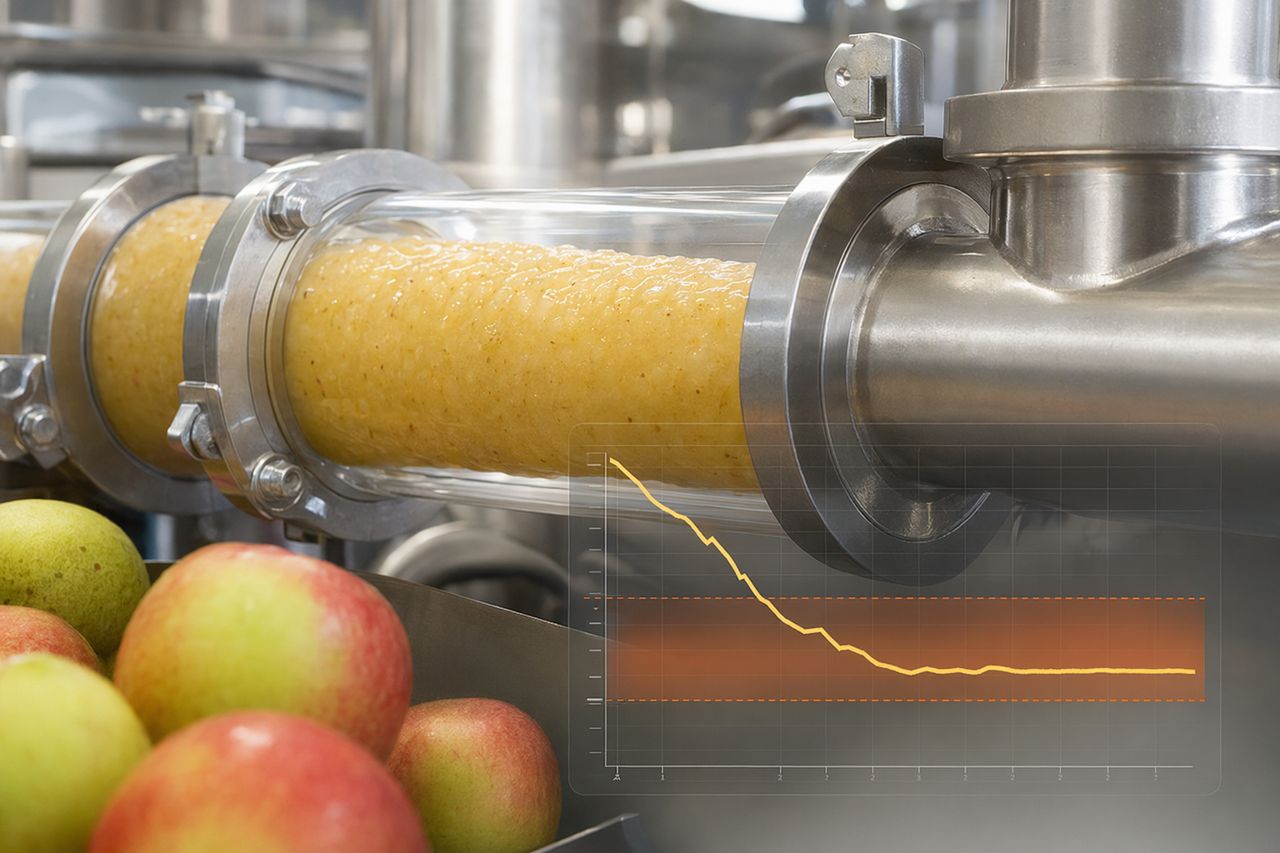
Apple and pear systems are often driven by pectin structure, soluble solids, and fruit maturity. When puree becomes stringy or rope-like, a pectin-focused enzyme approach can help reduce elastic behavior and improve flow through screens, heat exchangers, and filling equipment.
Typical process value:
- Reduced stringiness after crushing or milling
- Improved pressing and finishing behavior
- More stable puree viscosity between fruit lots
- Better transfer without excessive dilution
Pulpy mango, peach, apricot, and tropical puree
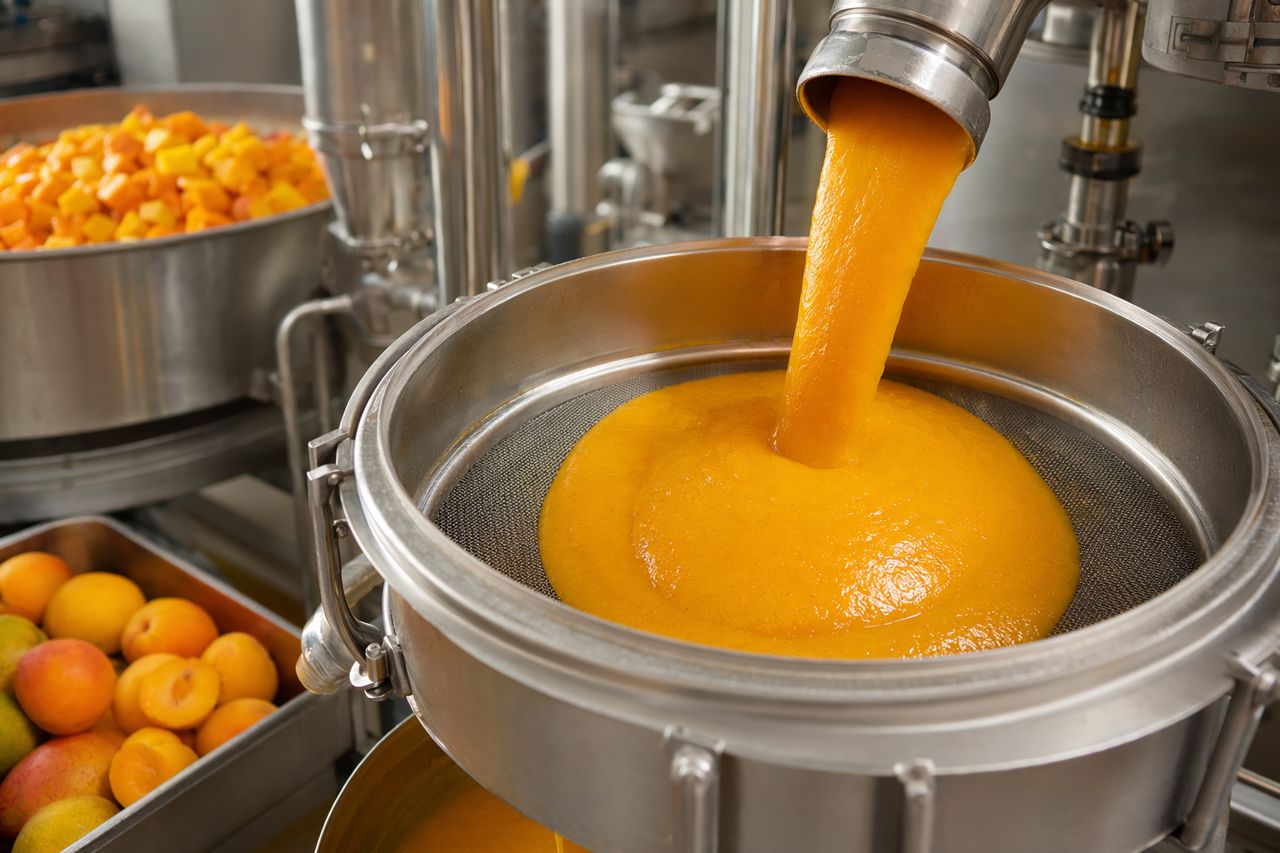
Tropical and stone fruit purees can carry fibrous pulp that increases thickness and causes screen loading. A balanced pectin and cell-wall enzyme system can help release trapped liquid, soften coarse pulp behavior, and improve consistency without stripping away the natural fruit body that your product needs.
Typical process value:
- Smoother pumpability in thick puree
- More uniform texture before blending
- Reduced equipment fouling from coarse pulp fractions
- Better yield from fruit that otherwise holds liquid in the fiber matrix
Starchy banana, plantain, and root vegetable blends
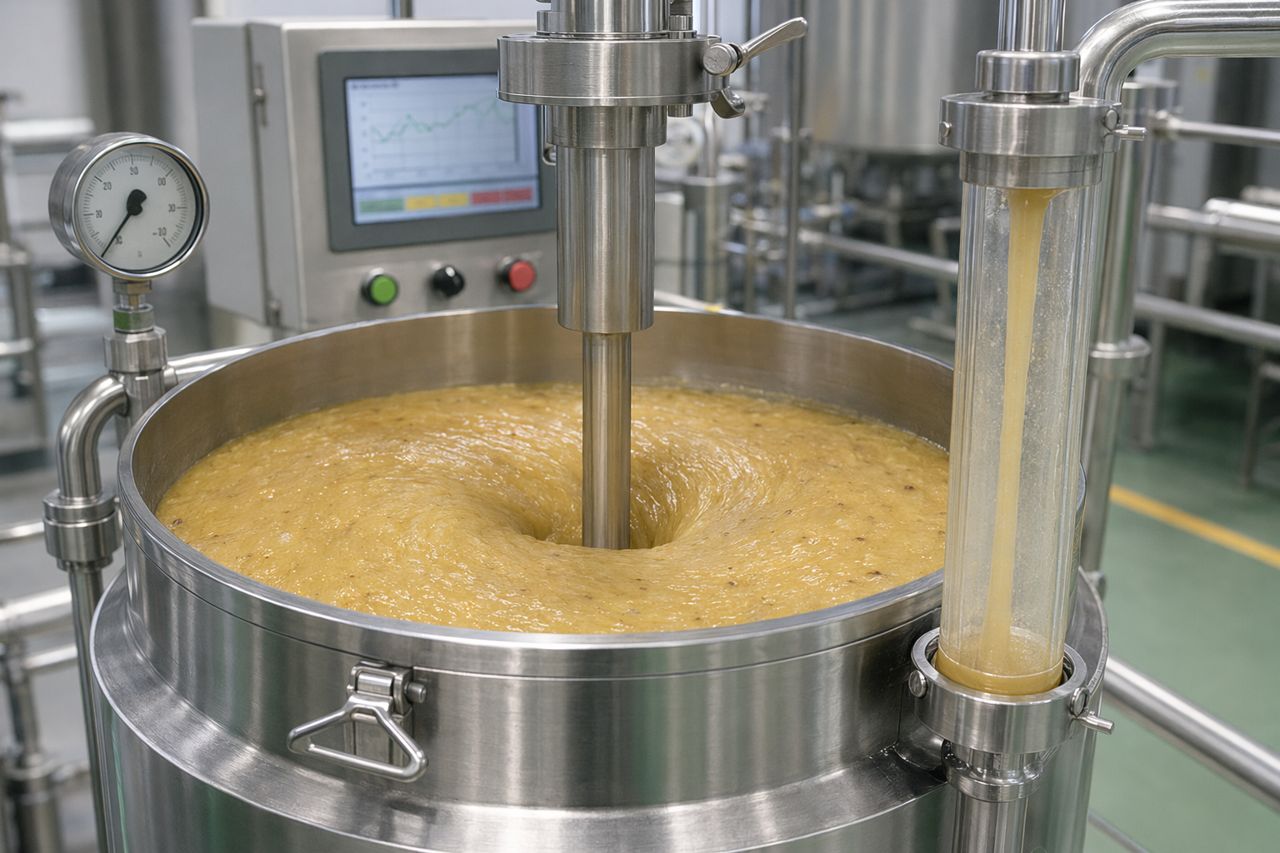
Banana, plantain, sweet potato, carrot, and mixed fruit-vegetable bases can behave very differently from high-pectin fruit. Starch can create heavy, paste-like viscosity that resists pumping and makes thermal processing less predictable. In these cases, an amylase-based component may be needed alongside pectin and fiber management.
Typical process value:
- Lower paste-like thickness in starchy bases
- More predictable cooking and blending behavior
- Reduced risk of localized over-thickening
- Better batch repeatability in mixed formulations
Built for puree plants, not generic enzyme selection
VelvetYield does not start with a catalog item and hope it fits. We start with your symptom, fruit matrix, process point, and target specification.
We typically review:
- Fruit type, cultivar range, and ripeness variation
- Whether the issue appears before or after heating
- Milling, maceration, holding, finishing, and pressing steps
- Desired final texture and baby food quality requirements
- Whether the priority is yield, viscosity control, filtration, or mouthfeel
- Current process temperature window and residence time
- Cleaning, changeover, and documentation expectations
From there, we recommend an enzyme approach that fits your process rather than forcing the process to fit the enzyme.
Where enzymes are used in puree processing
Every plant layout is different, but puree viscosity enzymes are commonly evaluated around these process points:
- After crushing or milling to reduce pectin-driven thickness before separation or finishing.
- During maceration or hold time to improve yield from fruit tissue.
- Before pressing or decanting to reduce liquid trapped in pulp.
- Before filtration or screening to reduce blinding and improve flow.
- Before final blending when texture needs correction without added water.
The best point depends on your fruit, your equipment, and whether you are producing a puree base, a smooth baby food product, or an intermediate ingredient for further blending.
What process managers usually want to improve
Pressing yield
Pectin and intact cell-wall material can trap juice and puree inside the pulp. A targeted enzyme system helps release recoverable solids and liquid so the press, finisher, or decanter can do its job with less resistance.
Texture consistency
Fruit lots change. Enzyme treatment can help narrow the gap between high-pectin, fibrous, ripe, and underripe incoming material so operators spend less time correcting texture downstream.
Filtration behavior
When puree is used as a base or needs polishing, pectin haze and fine suspended solids can overload filtration. Enzymatic viscosity reduction can improve filterability and reduce sudden flow collapse.
Batch reliability
A stable enzyme program can reduce emergency dilution, rework, extended hold time, and inconsistent filling behavior. For puree and baby food plants, that reliability is often more valuable than a single yield gain.
Practical proof points to track in your trial
VelvetYield recommends evaluating enzymes with plant-relevant measurements, not just lab observations. Useful trial indicators include:
- Pump pressure trend during transfer
- Time to empty a tank or move a batch
- Press cake wetness and recovered puree mass
- Screen blinding frequency
- Filtration flow stability
- Final puree viscosity against your internal specification
- Sensory texture compared with your approved standard
- Filling consistency and batch release behavior
A good enzyme trial should make the line easier to run while keeping the finished puree within the texture your customers expect.
Food-grade support for baby food and puree operations
Baby food and puree plants need more than performance. They need confidence in documentation, repeatability, and supplier responsiveness.
VelvetYield can support your procurement, quality, and production teams with:
- Food-grade enzyme options suitable for fruit processing applications
- Product documentation for technical and quality review
- Lot traceability and consistent supply planning
- Application guidance for plant trials
- Recommendations based on fruit matrix and process target
- Scale-up support from pilot batch to production run
Request a quote for your puree viscosity problem
Tell us what fruit base you are running, where the viscosity problem appears, and what you want to improve: yield, flow, filtration, texture, or batch reliability.
Use the on-site request a quote form and include any relevant process notes, such as fruit type, target texture, current pain point, and where you would prefer to dose enzyme in the line.
VelvetYield will respond with a practical enzyme recommendation for your puree process.
Request a quote